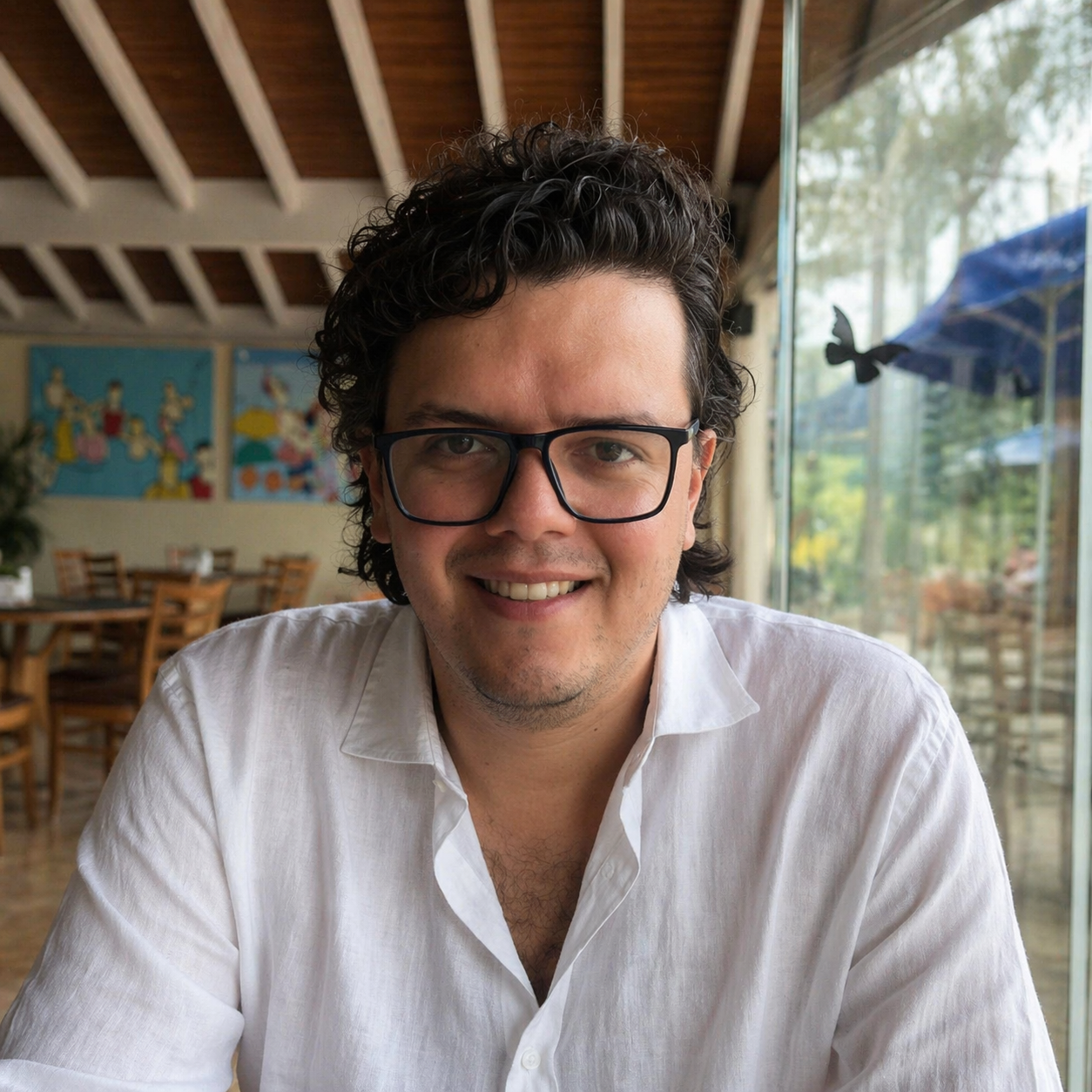
Guillermo Parada González
Computational biology, RNA regulation, and machine learning for neurogenomics.
Postdoctoral Researcher · Centre for Developmental Neurobiology, King's College London
Visitor Scientist · The Francis Crick Institute
I develop computational and machine-learning methods to understand how alternative splicing is regulated in the brain, and how genetic variation disrupts RNA regulatory programs in neurodevelopmental disorders. My work combines scalable bioinformatic workflows, interpretable sequence models, and family-based human genetics.
Research themes
Microexons and neuronal splicing
Systematic discovery and quantification of microexons, with a focus on brain-enriched, developmentally regulated splicing programs and autism-associated genetic variation.
Machine learning for RNA regulatory grammar
Interpretable sequence-to-splicing models that connect local sequence context and splicing regulatory motifs to exon inclusion and variant effect prediction.
RNA structure and alternative splicing
Transcriptome-scale analyses of RNA secondary structures — including G-quadruplexes and Alu-mediated RNA duplexes — as regulatory layers that shape exon inclusion.
Selected publication highlights
-
Alu-mediated RNA duplexes are associated with widespread exon skipping across primate transcriptomes
Genome Biology · 2026
Co-first and co-corresponding author; helped establish RNA duplexes as a major layer of primate-specific splicing regulation.
-
MicroExonator enables systematic discovery and quantification of microexons across mouse embryonic development
Genome Biology · 2021
Sole first author; developed MicroExonator and a systematic microexon atlas across mouse development.
About
I am a postdoctoral researcher in molecular and computational biology at King's College London, with Visitor Scientist status at The Francis Crick Institute. My work focuses on the regulation of alternative splicing in the nervous system, with a particular emphasis on microexons, RNA regulatory elements, and disease-relevant genetic variation.
I develop and apply computational methods for large-scale RNA-seq analysis, splicing quantification, and machine-learning models of RNA regulatory grammar. A central theme of my work is to connect transcriptomic regulation with human genetics, especially in autism and broader neurodevelopmental disorders.
My research trajectory has been shaped by building tools first, using those tools at transcriptome scale, and then connecting the resulting molecular maps to disease mechanisms and variant interpretation.